


To improve the efficiency of factory production lines
What is an IoT system?
IoT systems for factories are systems that install IoT sensors on factory production lines and equipment, aggregate information obtained from those sensors, and perform analysis and visualization on the cloud.
Specifically, data collected from sensors such as temperature, humidity, vibration, pressure, light, and sound is used for various purposes, such as detecting production line operating status, failures, and improving product quality. Masu.
IoT systems for factories are expected to have effects that will lead to improvements in overall factory productivity, such as visualization and automation of production lines, quality improvement, and optimization of maintenance. For example, by monitoring production lines with sensors, the operating status of the production line and abnormalities are automatically detected, leading to early detection of failures and preventive maintenance. In addition, product quality inspection using IoT sensors can be performed more accurately and quickly, leading to improved product quality.
Furthermore, IoT systems can analyze huge amounts of data on the cloud, and through analysis using data mining and machine learning, they can optimize production lines, improve productivity, improve energy efficiency, and improve quality control. We can provide solutions to various issues such as:
As mentioned above, IoT systems for factories are expected to have the effect of improving the productivity and quality of the entire factory, and are becoming increasingly important in the industrial world.

About “OEE”
By implementing an IoT system, you can calculate the Overall Equipment Effectiveness (OEE), which is one of the metrics used to measure the production efficiency of manufacturing equipment and factory lines.
OEE is composed of three elements: availability rate, speed loss rate, and quality loss rate, all expressed as a percentage of the total production time. With the introduction of an IoT system, this data can be comprehended in real-time, allowing for the early detection of issues and improvements in production efficiency.
Concrete Example
Plastic Molding Manufacturers
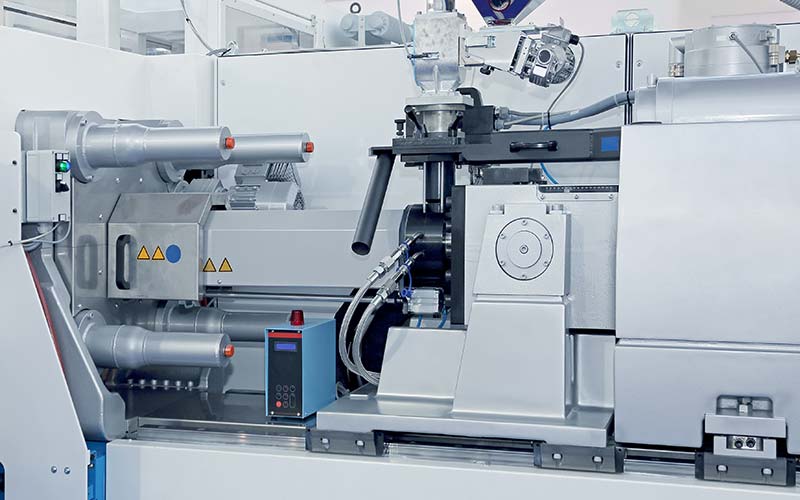
IoT sensors are attached to molding machines to collect machine operating status, production volume, production time, downtime, failure status, etc. in real time, and the data is accumulated on the IoT platform.
By acquiring OEE data classified into the three elements of molding machine operation rate, speed loss rate, and quality loss rate using the IoT platform, it is possible to support early response to decreases in operation rate and machine failure. can.
- If the utilization rate is decreasing
IoT systems can provide early detection. By identifying the cause and improving the operating rate, you can improve production efficiency. - If a machine malfunction occurs
IoT systems can provide early detection. By identifying the cause of machine failure and responding quickly, you can reduce production line downtime. - Comparison of actual results against production plans
By analyzing the number of products actually produced, time taken, yield rate, etc. in comparison with the production plan, we can identify areas for improvement in the manufacturing process, which is expected to lead to improved production efficiency and reduction of defective products.
Automotive Parts Manufacturer
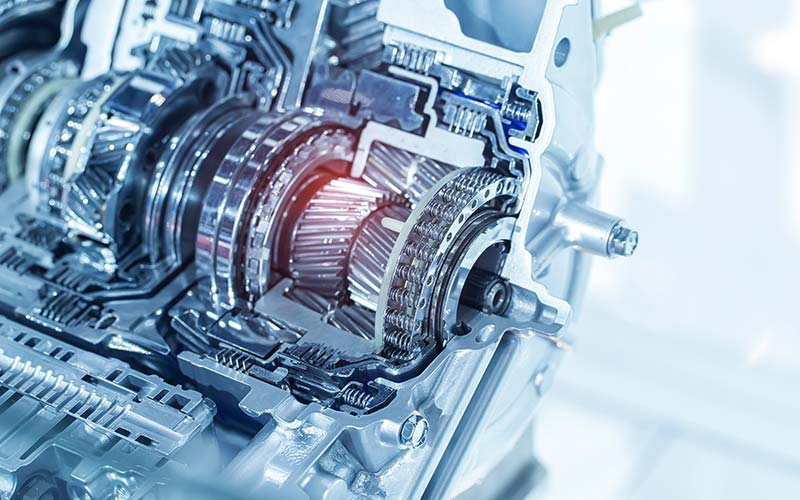
By capturing and analyzing the operational status of machines on the production line using IoT sensors, we obtain Overall Equipment Effectiveness (OEE) data. IoT sensors collect real-time data on production quantity, operational status, and machine faults for each machine on the production line, which is then collected, analyzed, and visualized on the IoT platform.
The obtained OEE data is categorized into three elements: availability rate, speed loss rate, and quality loss rate. This allows for a detailed analysis of the production efficiency of manufacturing equipment and factory lines.
Furthermore, through data analysis by the IoT system, early responses to decreased availability rates and machine failures can be implemented, enhancing overall production efficiency.